In the process of the Shiite Crescent becoming active and militarily prominent in our region, Iran has carried out a huge PR campaign. Iran, which has an enormous cultural treasure, used this as the backbone of its propaganda. In this process, a myth of Iran that has not broken away from its ancient traditions, but is effective in the modern world, especially in the field of defense industry, has been created.
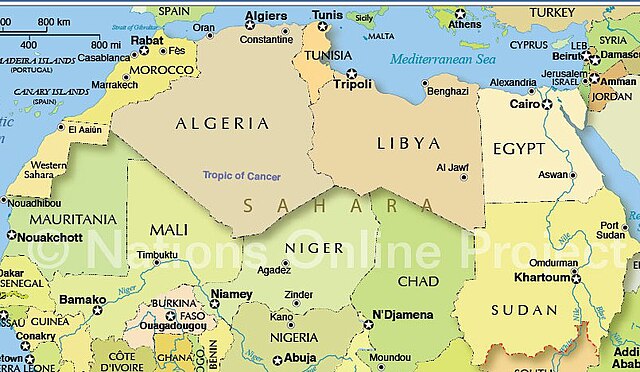
However, when Iran tried to bite off more than it could swallow and messed up, the cap fell off and the bald spot was exposed. This revelation came in two stages. The first was its real defeat on the ground: Starting with the US assassination of Qassem Soleimani, the Houthis in Yemen were first worn down by Saudi Arabia, but when they attacked international trade routes and Israel, they found the US navy against them. In December 2024, Sanaa was bombed. In the Mediterranean region, Hezbollah, waging a proxy war on behalf of Iran, was humiliated and defeated by penetrating its capillaries. Things did not go as they expected on the Syrian front either, and the Shiite Crescent and the Iranian myth have disappeared into the dusty pages of history for now.
The second one we followed and are following on social media. Many have been struck by Iran’s attempts to sell its defeats to its own public. There was a lot of visual manipulation, hamas, symbolic gestures such as hoisting flags at shrines and putting rings on fingers, and heavily edited and digitally-enhanced videos after each defeat. Most recently, this week, Khamenei brought a meddah to a meeting and tried to deal with the defeats in Lebanon and Syria in this way. Yes, you heard it right, a meddah.
As a repressive regime, Iran knows how to engineer society. But the secret of its “success” in these matters is not just that it is a repressive theocracy. The much-vaunted Iranian state mind and its ancient culture are built precisely on such manipulations. In fact, we are talking about a country that, in order to avoid the immorality of Western culture, has made a whole country swallow two characters who are lovers in a TV series as cousins by cutting and reassembling the series. Let’s look at the roots of this phenomenon:
The Invention and Legacy of State Traditions by Cyrus the Great and Darius the Great
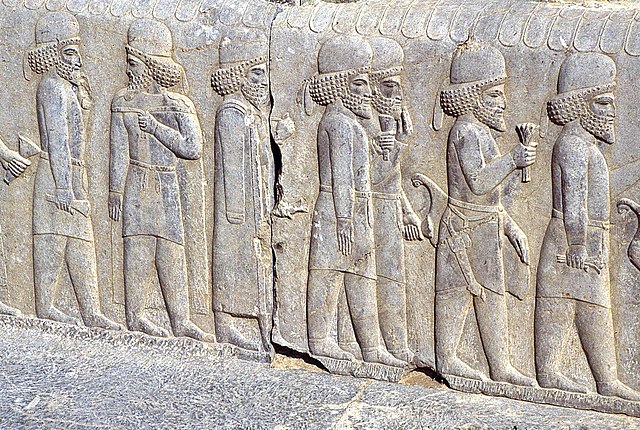
Cyrus the Great and Darius the Great, through their innovative governance and enduring statecraft, effectively constructed a model of imperial power that can be likened to the creation of a simulation – a carefully designed system that mirrored and regulated reality to ensure stability and harmony. This simulation, encompassing governance, culture and ideology, eventually became a simulacrum, a representation that defined the essence of imperial rule for subsequent rulers and civilizations. By blending inclusiveness, efficient governance and symbolic authority, they not only built the Achaemenid Empire, but also set paradigms that endured long after their empire was gone. It was during this period that the seeds of tradition were sown and its most advanced practices were realized. Consequently, the past became an insurmountable bar to be surpassed, and was taken as an example in later periods.
The Creation of Simulation: Governance and Ideology
Cyrus the Great (559-530 BC) initiated this “simulation” by building an empire that reflected and incorporated the diversity of his subjects. As can be seen in the Cyrus Cylinder, his policies of tolerance enabled the empire to mimic the appearance of a universal order in which each culture of his subjects felt recognized and valued. By restoring temples, respecting local customs and freeing captive peoples such as the Jews, Cyrus created an empire in which the illusion of autonomy masked the reality of centralized control. The provinces, or satrapies, were ostensibly structured to operate independently, but they were closely tied to the imperial center. This was a system ahead of its time.
Philosophically, this approach seems compatible with the creation of a simulation, a controlled framework designed to represent and manage a chaotic reality. At least we can call it an orderly presentation of chaos. As the empire became a microcosm in which different ethnic, linguistic and religious components were harmonized into one overarching system, Cyrus, by embedding local traditions into the imperial administration, not only maintained order but also legitimized his rule through symbols that resonated across cultures. Even without democracy, the consent of the subjects was important. Cyrus understood this.
Darius the Great (522-486 BC) transformed this simulation into a more sophisticated model. His codification of laws, establishment of a uniform currency and construction of the Royal Road created an interconnected system that functioned as an empire-wide matrix. These measures made the empire appear as a seamless and coherent entity, with regional differences subsumed under a broader narrative of imperial unity. The postal and logistics system established by Darius was later imitated many times over. This is where the Ottoman postal cart system has its roots.
Darius also used monumental architecture and inscriptions to reinforce this simulacrum. The Behistun Inscription, for example, functioned as both a record and a simulacrum of imperial power. By describing the divine legitimacy and victories of Darius, it presented a fictionalized narrative of stability, justice and divine grace, reflecting not the messy realities of empire but an idealized version of it. Religion played an important role in those times as well, and the king was presented as a figure in whom the gods were not absent from the top of the box.
Simulacra Imperial Rule as Reality
Over time, the simulation created by Cyrus and Darius became a simulacrum – a representation that came to define the very concept of empire itself. Future empires, including the Seleucid, Parthian and Sassanid states, inherited and adapted the Achaemenid model, embedding its principles so deeply that they became indistinguishable from the reality of governance.
This process reflects Baudrillard’s idea of the simulacrum, where the distinction between reality and representation is blurred and representation becomes reality. The satrapal system, for example, became a template for ruling large and diverse empires. The concept of divine kingship, with its emphasis on cosmic order and justice, became a key feature of rulership in the Persian world and beyond. By the time the Turkish empires adopted these traditions, the Achaemenid model had transcended its historical origins to become a normative framework for imperial rule.
Impact on Turkish Empires
Turkish empires such as the Seljuks, Safavids and Ottomans inherited and perpetuated this simulacrum. Safavid rulers, for example, adopted the Achaemenid emphasis on divine legitimacy and cosmic order and integrated it with Islamic and Turkic traditions. Similarly, the Seljuks and Ottomans adopted Achaemenid administrative structures to govern their vast territories, using governors and provincial autonomy to simulate the coherence of an empire. Beginning with the Seljuk rulers, it is not difficult to see the foundations of the idea of the ruler as zillulahul fil’arzeyn, the shadow of God on earth.
In these empires, the simulacrum of rule established by Cyrus and Darius became a fundamental reality – a simulacrum of imperial power that determined how empires were constructed and perceived. This influence is particularly evident in the Safavid use of monumental architecture, such as the great mosques of Isfahan, which reflect the symbolic function of Persepolis as a representation of imperial unity and divine grace.
A Legacy for Modern Times
The simulacrum of imperial rule created by Cyrus and Darius continues to shape political systems today. The principles of inclusiveness, standardized governance and infrastructural development resonate in modern statecraft, where governments emulate unity and order through institutions, legal frameworks and symbols of national identity. The enduring appeal of the Achaemenid model lies in its ability to transcend its historical context to become a timeless representation of effective governance.
This is where it all comes crashing down for Iran. At a time when the United States of America, which is essentially a republic like Iran, dominates the world with these values, the mullahs, the winners of the process that began with the overthrow of Mossadegh, are trying to brainwash their own people by wallowing in a simulation and simulacrum. This is why the production of consent is reduced to simple gestures and mimics, symbolic movements and visuals. When Cyrus and Darius chose the path of glamorization for their power, they had a plan and left behind a great empire and imperial legacy. Because the representations they created were supported by a rich and successful empire, the satrapal system continued. In fact, because Cyrus saved the Jewish community from extinction due to his minority policy, Cyrus is today considered by Jews to be the only non-Jewish prophet and streets and buildings are named after him. The same Jews obviously have no love for modern Iran.
The mullahs tried to create a simulation that had no foundation and was not supported by facts, and this dream collapsed like a tower of playing cards. This is the reason why we have gone down to the level of meddahs, clowns and jesters. I’m not saying you should praise Iran, I’m not saying you shouldn’t. It is a really ancient and rich culture. But don’t take the bait while doing so or you will find yourself in the middle of a meddah play and you won’t know it (meddah: a traditional story teller, who plays in front of a small group of viewers, such as a coffeehouse audience).