In December, Sudan’s Chief of General Staff, General Abdulfettah al-Burhan, accepted Turkey’s mediation offer to end the fighting that has caused a serious humanitarian crisis in the country. In a phone call with al-Burhan on December 13, President Recep Tayyip Erdoğan offered to mediate between the Sudanese government and the United Arab Emirates (UAE). The UAE is alleged to have provided arms to the Rapid Support Forces (RSF), which are in conflict with the Sudanese Armed Forces (SAF). The UAE denied providing arms but warmed to the mediation offer.
Sudan is an important country for Turkey. Although the rapprochement under al-Bashir was interrupted by the cold attitude of the transitional government that took power after al-Bashir lost power, it finally started to get back on track with the initiative of Lieutenant General Abdel Fattah al-Burhan, Chairman of the Sovereignty Council. In addition to trade relations, Turkey gained another important advantage on the Red Sea route with the transfer of Suakin Island to Turkey for 99 years. The humanitarian aid to Djibouti, the military cooperation agreement with the Djibouti Ministry of Defense, and the Defense University and TURKSOM Military Training Base in Sudan are signs that Turkey is trying to be permanent in the region. Taken together with its mediation in the crisis between Sudan and Ethiopia on the African continent and its acquisition of mining, oil and gas concessions in Niger, it is clear that the Red Sea region in general is seen as a starting point for deeper relations with Africa.
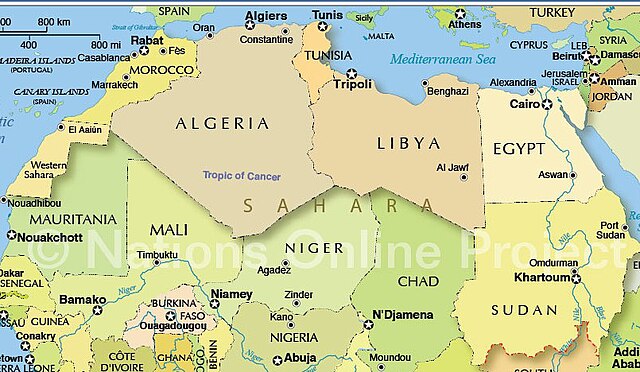
Turkey, which has historical ties to the region due to its Ottoman heritage, is making the right moves to protect its gains in the South of Syria, Cyprus and Libya, and at the same time to gain a foothold on global trade routes. This struggle is a multilateral one. In Sudan, for example, there is competition with the United Arab Emirates and Egypt. Across Africa, Turkey is trying to steal a role from the so-called giants like China, Russia and France. In the Eastern Mediterranean and North Africa, its struggle with Russia has increasingly taken on a military character. In Syria, Russia was on the losing side, and with the military base in Latakia losing its importance, the logistics and supply lines of Russia’s African operations were threatened with disruption. Following the loss of the war, there are reports of activity in Russia’s bases in Libya. The Al Khadim base near Benghazi is particularly active. It is also alleged that Russia is about to establish another base further south. Russia, which supported Khalifa Haftar, who controlled the Tobruk and Benghazi regions in the Libyan Civil War that broke out after the overthrow of Gaddafi, did not achieve significant successes on the ground, but gained privileges in Haftar regions. For now, there is an unspecified ceasefire between the Turkish-backed Libyan National Government and Haftar’s forces.
However, this situation is jeopardized by the changing balance in Syria. Russia will consider the Tobruk region as an alternative to the Khmeimim and Tartus bases. On the other hand, Russia, which until yesterday supported the Rapid Support Forces in the Sudanese Civil War, switched sides in 2024 and sided with the Sudanese Armed Forces. Its alignment with Turkey in Sudan may seem unusual, but the reason is again rivalry. Russia wants to establish a military base in Port Sudan.
This is precisely where the pudding hits the fan. The Russian-controlled Wagner group is very active in Mali, Burkina Faso, the Central African Republic and Niger and is seen as the force behind these countries’ breaking their ties with the West and their former colonial masters. Libya is the gateway to the north of this region and one of the largest oil and gold fields in Africa. Haftar is dependent on Wagner and will give them whatever they want. If the Red Sea side of this line is blocked by a base in Sudan, Turkey and the forces it supports in Libya will be in a difficult situation.
Such a development has the potential to be much more than a simple regional loss. Russia’s move in Libya poses a major threat to NATO. NATO’s indirect involvement in the developments in the region will weaken Turkey’s hand despite being a member state. The biggest impact of the defeat of the forces supported in Libya is the collapse of the force field Turkey is trying to create in the Eastern Mediterranean. Greece and the Greek Cypriot Administration of Southern Cyprus are looking forward to this. In addition, Turkey, which broke the UAE influence in the Persian Gulf with the agreements with Qatar and the Turkish military presence, and in the Eastern Mediterranean with the victory in Libya, will find it difficult to make moves to corner the UAE in the Red Sea via Sudan, and the gains in Libya and Qatar will be jeopardized.
The other possibility is to avoid an escalation of tensions in Sudan by pursuing a policy of balance, as in Libya. However ideal it may seem, this is not a realistic scenario. Russia is worn out from the protracted war in Ukraine. Its defeat in Syria and the successive losses of its Eurasianist allies in the region, Iran, will push Russia to take more radical steps. Iran’s Shia Crescent has reached the point of collapse at the end of the process initiated with the assassination of Qasem Soleimani. There is talk in the US that the government that will take power in January 2024 will directly target Iran. Russia will not take any chances and will strengthen its presence in the Mediterranean and Africa with an aggressive policy.
It will be relatively successful in the Sahel region, but its increased military presence and naval base in Tobruk will reignite the Libyan Civil War, and this time Turkey has a strong hand. It has largely solved the Syrian problem and can field in Libya what is left of its forces, with the exception of those to fight the PKK. Russia is well aware that its main rival in the Eastern Mediterranean is Turkey. This is evidenced by the painting on the walls of the Tartus Naval Base of the Battle of Çesme, where the Ottoman fleet was completely destroyed by the Russians. Their aim is to bring Turkey to its knees in a second Battle of Çesme and become the sole ruler of the region. This time things are different. Russia is unable to pass its ships through the Straits because of the war and Turkey is a NATO member. Russia, which is already causing concern in Europe and the Atlantic with its possible actions in Libya, has neither the courage nor the power to attack Turkey directly. The proxy wars will continue, Wagner will be back in the thick of things, and when the dust settles, the winner of the Mediterranean and North Africa region will be decided.