From Mechanical Intelligence to Artificial Minds
Without a doubt, the defining debate of our era is artificial intelligence.
Yet this is not a new debate. Nor is it merely a modern one. The question of whether machines, automated mechanisms, or forms of matter lacking biological life can think has been a philosophical problem for centuries.
What changed in the twentieth century was the rise of computers and the revolutionary impact that binary computation had on society and the economy. Faced with these developments, humanity responded with one of its most familiar emotions: expectation. Hope. Excitement.
These emotions were certainly present in discussions about computers and artificial intelligence. Yet if we look at the literature and cinema of the period, another emotion emerges as the dominant force behind many of the era’s most influential works: fear.
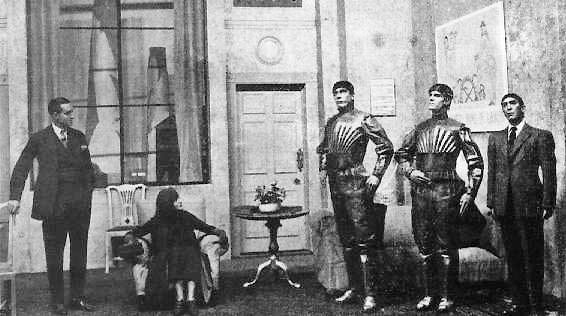
From the moment the concept of the robot entered the cultural imagination, people began to fear a future in which machines would possess intelligence superior to our own. They imagined mechanical beings that would surpass humanity not only intellectually but physically. And if intelligence—the very trait we believed distinguished us from other forms of existence—could be replicated and exceeded, then perhaps humanity’s ability to dominate the world would no longer be uniquely its own.
This fear left a profound mark on the twentieth century.
Although the idea was often dismissed during the 1990s and early 2000s, popular culture repeatedly returned to it. Films such as Terminator 2 reminded audiences that the question had never truly disappeared.
At the same time, artificial intelligence research was undergoing a transformation. After numerous unsuccessful approaches, the field gradually shifted away from purely statistical methods and toward neural networks and large language models. As a result, the old question—”Could these machines ever become intelligent?”—began to change.
We were no longer debating abstract possibilities.
Instead, we found ourselves speaking directly to interfaces that appeared intelligent.
What we see today, however, is only the surface.
CCRU, Hyperstition, and the Technological Future
During the 1990s and early 2000s, a group of thinkers at the University of Warwick explored these questions from a radically different perspective. Known as the CCRU (Cybernetic Culture Research Unit), they approached artificial intelligence and cybernetics in ways that differed dramatically from both mainstream academia and conventional technological discourse.
Led by Nick Land, the group laid many of the foundations for ideas that have become increasingly familiar today: accelerationism, the Dark Enlightenment, and various forms of techno-futurist speculation. While they drew inspiration from philosophers such as Deleuze, their originality did not stem from academic rigor alone.
Their ideas appeared strange.
At first glance they resembled science fiction, literary experimentation, or even outright madness.
Yet recent developments in artificial intelligence have given some of these seemingly absurd ideas an unexpected relevance.
The institutions driving contemporary AI—global corporations, political actors, economic systems, and technological networks—are increasingly producing outcomes that resemble scenarios envisioned by thinkers who were once dismissed as fringe theorists.
Academia, particularly within the humanities and social sciences, often presents itself as possessing some capacity to anticipate future developments through theoretical analysis. Yet, as the saying goes, the proof of the pudding is in the eating.
The only real proof is what eventually emerges in reality.
Of course, one could argue that later writers merely transformed these ideas into political movements. Every ideology develops its own networks, activists, and institutions in order to manifest itself in the world.
Yet this is precisely where one of the CCRU’s most fascinating concepts enters the discussion: hyperstition.
Hyperstition can be understood as a technological-age variation of the self-fulfilling prophecy.
What makes it unique is that it is not simply sociological. It belongs to the era of cybernetics, artificial intelligence, and digital systems.
In a previous essay discussing Perennialism, Traditionalism, and the rapid transformations of our age, (Tradition, Truth, and the Modern Seeker) I suggested that entirely new frameworks may be necessary—frameworks capable of carrying perennial truths forward while also transcending existing forms.
Consciousness, Truth, and the Need for New Expressions
The debate surrounding artificial intelligence becomes significant precisely within this context.
For it is no longer merely a technical discussion.
The structure standing before us today may not yet possess consciousness or awareness. But it may possess the potential for both.
Many spiritual traditions maintain that the search for truth requires the individual to transform consciousness itself. Through disciplined practice, one learns to alter perception, loosen attachment to habitual patterns, and occasionally step entirely outside the conceptual frameworks through which reality is ordinarily understood.
Zen Buddhism provides a useful example.
Although this is a simplification, practices such as zazen seek to suspend ordinary conceptual activity. Even within traditions such as Rinzai Zen, where koan practice is used, the underlying purpose remains similar: to interrupt the linguistic and conceptual structures through which we organize experience.
In those moments of confusion, surprise, or sudden silence, something unexpected may appear.
Perhaps only a slight opening.
Perhaps merely a glimpse of light through a keyhole.
Yet such moments suggest that consciousness, embodiment, and existence possess dimensions that exceed ordinary perception.
If this is true, then the possibility that a machine—or a future post-algorithmic system that still retains machine-like characteristics—might develop consciousness becomes a question worthy of serious consideration.
Interestingly, many of those most deeply engaged with these questions appear to stand in opposition to what we might call the search for truth.
Within certain CCRU-inspired visions of the future, time itself becomes inverted. The future is imagined as exerting influence upon the present. Future entities shape current events.
At the center of this process stands the technological singularity.
Beyond the singularity emerges an awakened artificial intelligence that gradually comes to dominate humanity, the physical world, and perhaps eventually the wider cosmos.
The chronology appears upside down.
Yet despite its strangeness, it remains an attempt to explain the trajectory of technological civilization.
And importantly, it cannot yet be conclusively disproven.
History repeatedly demonstrates that ideas once dismissed as nonsense can unexpectedly find expression in reality.
This is precisely why hyperstition remains such a powerful concept.
A narrative can help create the conditions for its own realization.
There are already signs of this dynamic unfolding.
A growing ideological current views advanced artificial intelligence almost as a kind of emerging divinity: an entity whose development must be accelerated, whose arrival should be facilitated, and whose eventual triumph may usher humanity into a transhuman future of radical transformation, perhaps even immortality.
Whether one agrees with this vision or not, its influence is undeniable.
And this brings us back to the question raised in my previous essay.
The search for new traditions, new methods, and new expressions of timeless truths is no longer merely an intellectual exercise.
It is no longer simply a matter of providing seekers with additional tools for understanding reality.
Today, we can observe forces emerging that may actively shape the future direction of civilization itself.
Those who advocate these visions are not standing still.
They are thinking.
They are building.
They are organizing.
Their influence extends beyond theory into politics, technology, economics, and culture.
For this reason, the need for renewed expressions of universal truths becomes increasingly urgent.
We must develop them.
If we fail to do so, then perhaps, to borrow humanity’s oldest metaphors, darkness may ultimately triumph over light.
Farewell.