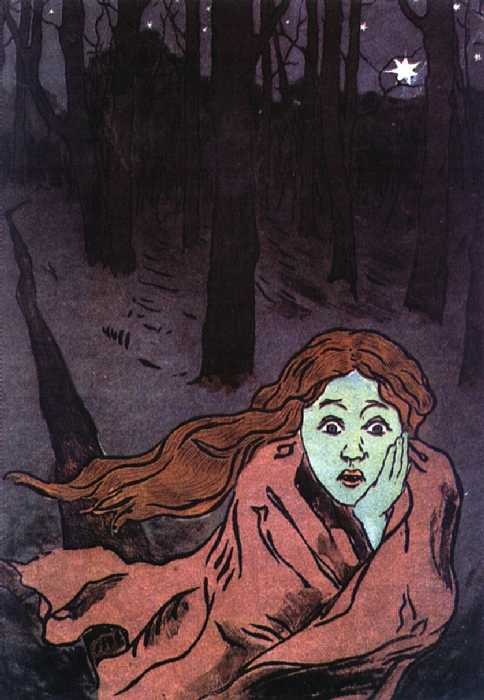
Fear is the feeling that nails a person to the spot. It may be humanity’s greatest enemy, and one of the most difficult things to overcome. Although its source often appears to be external, fear actually comes from within us. Unfortunately, simply knowing this is rarely enough to make it disappear.
Sometimes we are forced to live with a fear that seems simple on the surface yet has the power to paralyze us. Consider, for example, arachnophobia—the fear of spiders. Yet perhaps the true source of that fear is not the spider itself.
Fear, by its nature, arises from the unknown. Its earliest foundation is likely the discomfort we feel when confronted with what we do not know or cannot understand. But upon closer examination, especially in cases that lead to anxiety and chronic worry, we may discover that fear often stems not from what we do not know, but from what we already know. What we know deep down, yet are afraid to confront—certain truths about ourselves, certain aspects of our character—these are often what bind our hands and feet.
Fear, Control, and the Inner World
Fear is perhaps one of the most effective instruments of control.
People frequently make important decisions out of fear. If you can successfully frighten someone, you can influence their decisions. And decisions made out of fear are, unfortunately, often poor decisions.
The saying that “even a bad decision is better than indecision” loses much of its truth in this context. A decision made under the influence of fear has the potential to damage a person’s life in the long run. Fear restrains us. It prevents us from realizing our potential.
This is why fear is one of the emotions people most desperately wish to overcome.
Many methods have been proposed for dealing with it. Of course, if your anxiety has become severe enough to interfere with your ability to function, it is important to recognize that modern medicine has made significant progress in this area.
You should seek professional medical help without delay.
Yet even when receiving treatment, many people eventually realize that purely mechanical or medication-based solutions can only take them so far. Beyond that point, two fundamental factors become increasingly important.
The first is a person’s support network.
Fear tends to grow in isolation.
As an interesting physiological observation, many people experience heightened unease late at night—around eleven, midnight, or the early hours of the morning—especially if they are unable to sleep or wake unexpectedly.
When we are alone, these feelings often intensify.
A network of friends, family members, and professionals can often reduce fear, anxiety, and distress. Yet this is only one side of the issue.
The second factor—and perhaps the more important one—involves what people discover when they are left alone with themselves.
Fear is not always entirely subjective, but it is nevertheless a deeply personal experience that emerges from within. At the same time, it is inseparable from the way we evaluate and interpret the world around us.
When a person falls into negative patterns of thinking, experiences irrational anxiety, or views life through a persistently pessimistic lens, these habits can become fuel for fear.
Ultimately, the final line of defense lies within the individual’s own psyche, mind, and perception.
And it is here that certain methods, often dismissed as mere curiosities or recreational activities, begin to reveal their deeper value.
Meditation, for example.
Meditation can be a doorway that opens onto the path toward overcoming fear.
Yet it may not work on its own.
More importantly, if someone has never practiced meditation before and does not fully understand what they are doing, guidance can be extremely valuable.
While learning to be alone with oneself is important, a person who is unaccustomed to such introspection may suddenly find themselves submerged in their own psyche. What they encounter there may be shocking. They may struggle to cope with it.
In the depths of silence, while attempting to confront fear, they may instead become trapped within it. They may descend deeper into their fears and become their prisoner, sinking further into the very condition they hoped to escape.
For this reason, meditation is a process that should not be entered into carelessly.
Beginning with the support of a knowledgeable and well-intentioned guide can be beneficial.
In today’s world, the internet provides access to a vast range of people and institutions. Someone interested in meditation can seek answers to questions about the practice through online communities, social media, and educational resources.
From Escaping Fear to Understanding It
Yet fear is not merely an emotion that must be eliminated.
From an evolutionary perspective, it must have served a purpose; otherwise it would not have remained with us.
The simplest explanation is obvious: a person who feels no fear at all is unlikely to survive for very long.
Fear prevents us from making certain mistakes.
The fear that ruins lives may arise because we fail to distinguish useful fear from useless fear.
At the same time, there is a deeper problem hidden within the modern obsession with eliminating negative emotions altogether.
Fear, like other emotions, can disrupt our lives when we lose access to it.
One of the greatest problems of modern people is not that they feel too much, but that they lack full access to their emotions.
By “access,” I mean more than simply recognizing an emotion and giving it a name.
To truly access an emotion is also to allow it to complete its natural development. It is an important step toward understanding and integrating it.
In some situations, overcoming fear may indeed be necessary.
But in others, it may be more valuable to transform fear into another emotion, to bring it to completion, or to make peace with it and learn how to live alongside it.
To turn fear into something useful, we must learn to look within.
As mentioned earlier, what frightens us may often be certain thoughts buried deep inside us—qualities we do not wish to see or hear about, and the worldview that emerges from them.
Of course, fearing the roar of a wild animal is an instinct deeply embedded in our genetics.
There is nothing wrong with that.
But if we continue the analogy, and if we wish to become skilled hunters, we must first understand why that fear exists. Then we must either overcome it or learn to use it.
Perhaps we can even project that fear outward and use it while confronting the lion itself.
As this example illustrates, rather than focusing exclusively on eliminating fear, it may be more important to discover our purpose in life. Once we have done so, we can observe where our emotions are leading us, what they are serving, and how they can help us move toward that purpose.
We will continue exploring the subject of fear in future writings.
Do not allow this important emotion to become an obstacle that prevents you from living your life.
And as mentioned earlier, if you are struggling with severe fear, anxiety, or psychological distress that significantly interferes with your daily functioning, please seek professional medical assistance.
If you are interested in delving into the depths of your mind and psyche, you might find my article Mirrors and Beyond the Veil: Pathways to Higher Realities of use.
Stay well.