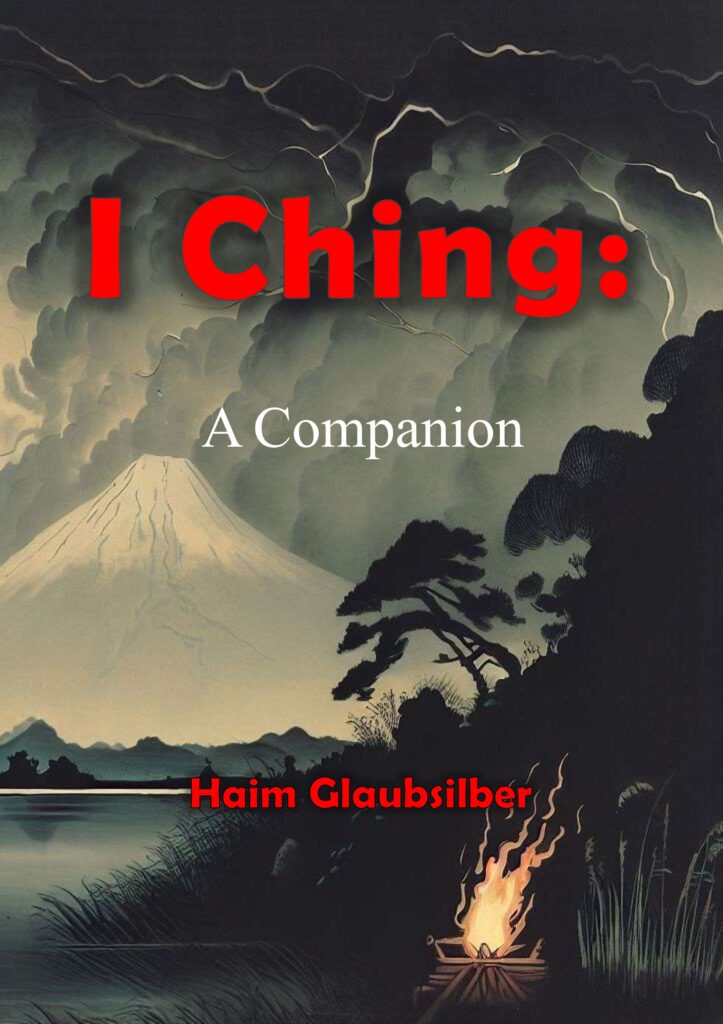
Haim Glaubsilber’s I Ching: A Companion offers an approachable and engaging introduction to one of the world’s oldest wisdom traditions. Rather than assuming prior knowledge of Chinese philosophy, the author guides readers through the historical, philosophical, and symbolic foundations of the I Ching, making the text accessible to both beginners and experienced students.
Particularly valuable are the introductory chapters exploring the perspectives of Carl Jung, Confucianism, and Taoism. These sections place the Book of Changes within a broader intellectual and spiritual context, highlighting its influence not only as an oracle but also as a profound system of self-understanding and personal transformation. The discussion of Jung’s concept of synchronicity provides a useful bridge for modern readers seeking psychological insight within an ancient tradition.
The heart of the book lies in its treatment of the 64 hexagrams. Each hexagram is presented in clear language, emphasizing practical wisdom and personal reflection rather than obscure scholarship. Glaubsilber succeeds in conveying the enduring relevance of the I Ching’s teachings on change, balance, perseverance, and self-cultivation, making the work suitable for daily consultation as well as systematic study.
While scholars seeking extensive historical criticism may wish for deeper academic analysis, the book’s strength lies in its clarity, accessibility, and sincere appreciation for the wisdom of the I Ching. As a guide for spiritual seekers, students of Eastern philosophy, and readers interested in Jungian symbolism, I Ching: A Companion serves as a valuable introduction to a timeless classic whose lessons remain remarkably relevant in the modern world. he book can be found on Amazon in e-book format: I Ching: A Companion